
2025-2026 Charitable Giving Guide

The Key Wealth Institute is a team of highly experienced professionals representing various disciplines within wealth management who are dedicated to delivering timely insights and practical advice. From strategies designed to better manage your wealth, to guidance to help you better understand the world impacting your wealth, Key Wealth Institute provides proactive insights needed to navigate your financial journey.
Charitable Giving in 2025
As we approach year-end, many clients are reviewing their philanthropic plans, and 2025 brings important updates that could impact how and when you give. Whether you support causes close to your heart or use charitable giving as part of a broader financial strategy, understanding the latest changes is key to maximizing both impact and tax efficiency.
Key Tax Law Changes Coming in 2026
The One Big Beautiful Bill Act (OBBBA), signed into law this summer, introduces several changes to charitable giving rules. While most provisions take effect in 2026, 2025 offers a unique opportunity to plan ahead.
Higher standard deduction (permanent)
- $15,600 for single filers and $31,200 for married couples (2025)
- Fewer taxpayers will itemize, reducing the number who benefit from charitable deductions.
Above-the-line deduction for non-itemizers
- Up to $1,000 (single) or $2,000 (married) for cash gifts to qualified charities.
- Expected to broaden participation among middle-income households that typically take the standard deduction.
Permanent 60% adjusted gross income (AGI) limit for cash gifts
- Maintains a generous ceiling for high-impact giving to public charities.
New AGI Floor and Deduction Cap for Charitable Giving
Starting in 2026, two major changes will reshape how itemized charitable deductions work for individual taxpayers:
1. The 0.5% AGI Floor
This new rule introduces a minimum threshold for charitable deductions. Itemizers can only deduct charitable contributions above 0.5% of their AGI. This floor does not apply to carryovers from pre-2026 contributions but does apply to those from 2026 onward.
How it works
- If your AGI is $500,000, the first $2,500 of charitable donations will not be deductible.
- Only the portion above $2,500 qualifies for a tax deduction.
Implications
- Smaller donations, especially those spread across multiple charities, may no longer yield a tax benefit unless they collectively exceed the floor.
- This could discourage casual or frequent small dollar giving unless donors “bunch” their contributions into a single year.
Planning tip
Consider donor-advised funds (DAFs) to consolidate multiple years of giving into one tax year, helping you exceed the floor and retain flexibility in distributing funds later.
2. Deduction Cap at 35% Tax Rate
Previously, itemized deductions — including charitable gifts — were valued at the donor’s marginal tax rate, up to 37%. Starting in 2026, the maximum tax benefit from charitable deductions will be capped at 35%, regardless of your actual tax bracket.
Example:
A donor in the 37% bracket who gives $100,000 to charity:
— 2025: Receives a $37,000 tax benefit.
— 2026: Receives a benefit is capped at $35,000, a $2,000 reduction.
Implications
- High-income donors will see a reduced incentive for large gifts.
- This cap applies to all itemized charitable deductions, including cash and non-cash gifts.
Planning tip
Accelerate large gifts into 2025 to lock in the full deduction value before the cap takes effect.
These changes are designed to limit the tax benefits of charitable giving for wealthier individuals, while expanding access for non-itemizers. However, they also introduce complexity and potential disincentives for traditional giving strategies.
Understanding the factors impacting tax benefits
For taxpayers who itemize, the tax benefits of charitable giving depend on factors that include:
- The type of asset contributed (e.g., cash, long-term capital gain property, short-term capital gain property, tangible personal property, self-created property).
- The basis and fair market value of the assets donated.
- The type of charity to which the gift is donated. The first category of qualified organizations is a public charity also known as a 50% limit organization. There are also non-50% organizations, which include certain veterans’ organizations, domestic fraternal societies, nonprofit cemeteries, and private foundations. These are known as 30% limit charities. The IRS has a database to search for tax-exempt organizations and how they are categorized. Search for tax exempt organizations | Internal Revenue Service. It’s important to note that contributions to individuals, political organizations, and certain private foundations may not be eligible for tax deductions.
- The income level and tax bracket of the taxpayer.
- As a rule, an individual cannot offset their entire income in a year with a sufficiently large charitable gift. The amount you can deduct for charitable contributions is generally limited to no more than 50% (60%for cash contributions) of your AGI. Your deduction may be further limited to 50%, 30%, or 20% of your AGI limit depending on the type of property you give and the type of organization you give it to. For large charitable gifts, amounts in excess of those limits can be carried forward for five more years. The new floors (0.5% for individuals, 1% for corporations) apply before calculating any deduction limits, including the 30% and 60% caps. This means donors must now exceed the floor before any percentage-based limit (30%, 50%, or 60%) is applied.
Planned gifts can make it possible for you to give more than would otherwise be the case, while providing important tax advantages to you. There are a variety of planned giving options.
Gift Appreciated Stock
Some of the most tax-efficient assets to give to charity are publicly traded stocks held 12 months or longer that have appreciated with unrealized capital gain. By donating these directly to the charity, you receive a deduction based on the fair market value (FMV) of the security, and neither you nor the charity pays a tax on the capital gain if the security is subsequently sold by the charity.
Donating highly appreciated stock may enable you to increase your gift and tax deduction automatically and save on capital gain taxes. This is how it works: When you donate appreciated assets to charity, you generally take a tax deduction for the full fair market value of the asset rather than your cost basis or the amount you paid for the stock. As a result, the value of your gift and the amount of your tax deduction increase, and you eliminate your capital gain tax exposure. When the charity later sells the stock, it pays no tax on the gain.
To maximize your charitable giving strategy, you must have enough deductions to make itemizing worthwhile. You need to have at least $15,600 in deductions for single filers and $31,200 for married couples filing jointly to make it worth it. However, even if you take the standard deduction this year and do not itemize your charitable deduction, you still benefit by eliminating the capital gain tax. This is a win for your favorite charity and a win for you.
For example, assume you are debating whether to donate $15,000 in cash, sell $15,000 in stock and donate the cash proceeds, or donate $15,000 worth of stock outright. What are the net tax savings of the different strategies?
What is Fair Market Value?
For publicly traded stock, that is the average of the high and low market price on the transfer date. Private-company stock requires an appraisal unless the estimated value is less than $10,000.
Donor-Advised Fund
You might consider contributing to a DAF to satisfy your charitable giving wishes. DAFs are often used to offset unexpectedly high earnings, year-end bonuses, and Roth conversions.
The basic concept of a DAF is straightforward:
- You contribute to the fund and subsequently recommend specific grants to favorite charities when you are ready.
- Keep in mind that your recommendations are subject to final approval and release of the funds by the administrating organization.
- You can claim a tax deduction for the year in which you put assets into a DAF; the amount and timing of any actual grant has no bearing on the tax deduction.
- DAFs are typically invested and grow tax-free.
- Donor-advised funds enhance giving flexibility. You do not have to identify nonprofit beneficiaries when you make tax-deductible contributions to your DAF, and you can distribute your contributions and investment gains to recipients over as long a period as you wish.
- Some DAFs can continue over successive generations and are an ideal way to involve heirs.
Offset the Tax Costs of a Roth IRA Conversion
If you are charitably inclined and plan to do a Roth conversion before the end of the year, a large itemized charitable tax deduction can help offset the taxes caused by a Roth conversion. Roth IRAs offer two important tax advantages: (1) unlike traditional IRAs and employer-sponsored plan distributions, qualified Roth IRA distributions are tax free; and (2) unlike traditional IRAs and employer-sponsored plans, Roth IRAs are not subject to required minimum distribution (RMD) rules that must begin at age 73. The bad news about a Roth conversion is the amount you convert from a traditional IRA to a Roth IRA is taxed as ordinary income in the year of conversion and may push you into a higher marginal federal income tax bracket. Keep in mind that not all states tax distributions from retirement accounts (check with your tax preparer to see whether state income taxes will apply to your Roth conversion).
There are situations where converting to a Roth may not make sense. If you expect to be in a lower tax bracket in future years, paying taxes now on a conversion could cost more than waiting. Similarly, if you don’t have enough cash or savings to cover the conversion tax, it may not be practical. A Roth conversion is also unnecessary if your beneficiary is a charity, since charitable organizations do not pay taxes on inherited IRA assets. Finally, if you might need access to the converted funds within five years, the early withdrawal rules could create penalties and taxes.
Featured case study
Jessica and Bruce Jones, both age 57, discuss with their advisor their concern over rising tax rates. They are well aware that their financial plan projects that they will be in a similar tax bracket in retirement as they are now and that their required minimum distributions (that must begin by age 73) will cause them to receive more income than they need or want in retirement. Their advisor recommends that they consider converting a portion of their traditional IRA balances to a Roth IRA over a period of time. She explains that there are many benefits to doing a Roth conversion, but it is a particularly advantageous way to reduce RMDs.
There is no RMD requirement for Roth IRAs for the lives of both spouses, and as a result the couple will reduce their taxable income in retirement. The Joneses think it is a great idea but express concern over the tax liability produced by executing a Roth conversion. The conversion to a Roth IRA would be taxable at the ordinary income tax rate, which currently is 24% for them. As Florida residents, they will pay no state income tax on the conversion. Knowing the couple currently donate significant amounts to charity each year, their advisor recommends establishing and contributing to a donor-advised fund. Their advisor then shares a charitable offset strategy that can be used with a Roth conversion.
After consulting with their tax advisor, the Joneses instruct her to convert $100,000 from their traditional IRA to a Roth IRA and to establish a DAF with an initial contribution of appreciated stock (cost basis of $50,000) with a fair market value of $100,000 (see table below).
By funding their DAF with $100,000, the Joneses net an additional $24,000 in federal tax savings and offset the taxes owed because of the Roth conversion. They also avoid incurring long-term capital gain tax of $7,500 on their highly appreciated donated stock.
The couple can support the charities they care about by making grant recommendations from their DAF over a span of several years. To continue their charitable legacy after their passing, they can name their children as successor donor-advisors.
Use Split-Interest Charitable Trust
Split-interest trusts are popular because of their dual beneficial interests: They can benefit a qualified charity and a noncharitable beneficiary.
A charitable remainder trust (CRT) provides noncharitable beneficiaries with exclusive rights to distributions until their interests terminate; at that time, charitable beneficiaries receive the assets left over in the trust. CRTs have been particularly useful for investors who want to diversify highly appreciated assets but have been concerned about incurring the capital gain tax. The deferral or avoidance of capital gain tax has been a popular feature for funding CRTs with appreciated assets.
Individuals with large retirement accounts should consider naming a CRT as beneficiary, particularly in light of a recent law (The SECURE Act of 2019) that requires retirement account benefits to be distributed within 10 years after the year of the retirement account owner’s death. In general, a CRT provides a current-income tax-charitable deduction and a stream of income to noncharitable beneficiaries, such as your children, for a term of no longer than 20 years or the life of one or more of the noncharitable beneficiaries. By using a longer payout term, a CRT can potentially avoid subjecting a beneficiary to a higher tax bracket and the 3.8% surtax on net investment income. When the trust term ends, the remainder passes to a charity or charities.
Make a Qualified Charitable Distribution
SECURE Act 2.0 modified and added some provisions related to qualified charitable distributions (QCDs). A QCD is an otherwise taxable distribution from an IRA (other than an SEP or SIMPLE IRA receiving contributions) owned by an individual who is age 70½ or older that is paid directly from the IRA to a qualified charity. Taxpayers can exclude up to $108,000 of QCDs from their gross income in 2025. The exclusion amount will be indexed for inflation. The QCD will satisfy or help satisfy your required minimum distribution associated with IRAs that must begin at age 73 (age 75 for those born after 1960). QCDs are not included in adjusted gross income, which makes QCDs beneficial for standard deduction filers. If you have IRAs with nondeductible contributions or multiple IRAs, there are special rules to determine what portion of deductible and nondeductible contributions has been distributed as a QCD and what portion of the remaining IRA is treated as including nondeductible contributions.
For years after 2022
Beginning in 2023, the SECURE Act expanded the definition of QCDs to include one-time distributions to create life income plans, also called Legacy QCDs.
Previously, QCDs could only be used to make an outright gift. The new life income plan or Legacy QCD, however, allows for a tax-free withdrawal from your IRA to establish a charitable gift annuity (CGA).¹ Similar to the current QCD rules, the Legacy QCD will count toward the IRA owner’s annual RMD if the gift comes directly from the IRA by the end of a calendar year. There are several considerations to keep in mind:
- It is a once-in-a-lifetime election.
- In 2025, a donor may contribute up to $53,000 through one or more life income gifts to multiple charities.
- The CGA can only benefit you and/or your spouse, and payments of at least 5% of the donated value must start within one year of the gift.
- The $54,000 counts toward the overall $108,000 QCD maximum annual limit.
- All payments by the CGA funded by the QCD must be fully taxable at the recipient’s ordinary income tax rate.
Giving Trends to Watch
Philanthropy is evolving rapidly, and donors are finding creative ways to make an impact. Here are four major trends shaping the future of charitable giving:
1. Monthly giving
Subscription-style donations are becoming increasingly popular. This approach provides nonprofits with a predictable revenue stream and allows donors to spread their contributions over time, making giving more manageable. Monthly giving programs often include perks like exclusive updates or recognition, which help donors feel connected and engaged year-round.
2. AI in fundraising
Artificial intelligence is transforming how charities interact with donors. From personalized outreach to predictive analytics, AI helps organizations tailor messages based on donor preferences and past behavior. It also improves transparency by generating real-time impact reports, which donors increasingly expect. This technology enables nonprofits to build stronger relationships and optimize campaigns for better results.
3. Generational shifts
Younger donors, particularly Millennials and Gen Z, are redefining philanthropy. They prioritize transparency, mobile-friendly platforms, and measurable outcomes. These generations are less motivated by tax deductions and more by social impact, often favoring causes aligned with their values. Nonprofits that embrace digital engagement and demonstrate clear results will resonate most with these donors.
4. Collaborative giving
Giving circles and pooled donations are gaining traction, especially among community-minded individuals. These models allow donors to combine resources for greater impact and foster a sense of shared purpose. Collaborative giving often includes group decision-making on where funds go, creating a more participatory and social experience that appeals to donors seeking connection and influence.
Gift Planning Summary of Outright Charitable Contributions
About Gretchen Miller
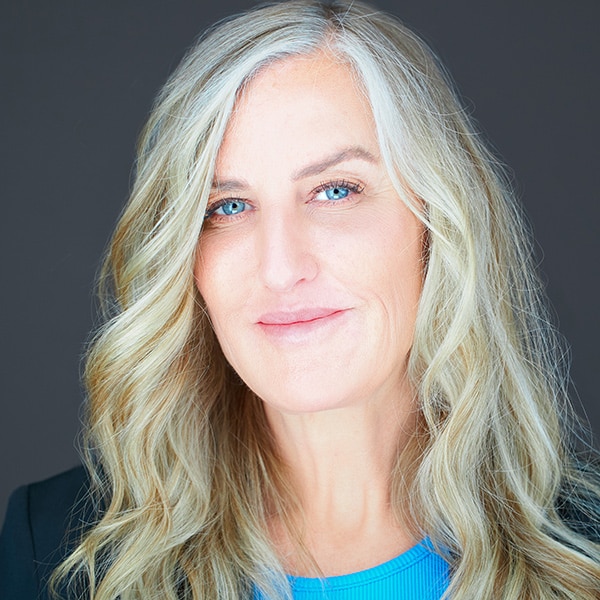
As a Relationship Manager for Key Private Bank, Gretchen focuses on ensuring her clients’ wealth management plans are carried through to meet their unique financial objectives and grow and preserve wealth. Gretchen coordinates the implementation of wealth management strategies with the relationship team and ensures clients have the tools and information to keep track of their financial situations and make informed decisions. She also coordinates regular communications and updates with the team and delivers the latest insights and advice to benefit clients’ particular situations.
Gretchen has more than 30 years of experience in financial services and is well qualified to help clients implement strategies to achieve their goals. Most recently, prior to joining Key, Gretchen served as Director of Advanced Planning for Prudential Financial, where she was a subject matter expert on financial and estate planning and on retirement topics such as Social Security, Medicare, and tax-efficient distribution strategies. Gretchen earned a Bachelor of Science degree in Management from Springfield College and an MBA from the University of Phoenix. Gretchen obtained her certification as a Certified Financial Planner®. Most recently, she obtained her Certified Private Wealth Advisor® certification in 2024. She is a member of the Financial Planning Association, the Investments & Wealth Institute, and the Institute for Divorce Financial Analysts®.
About Cynthia J. McDonald
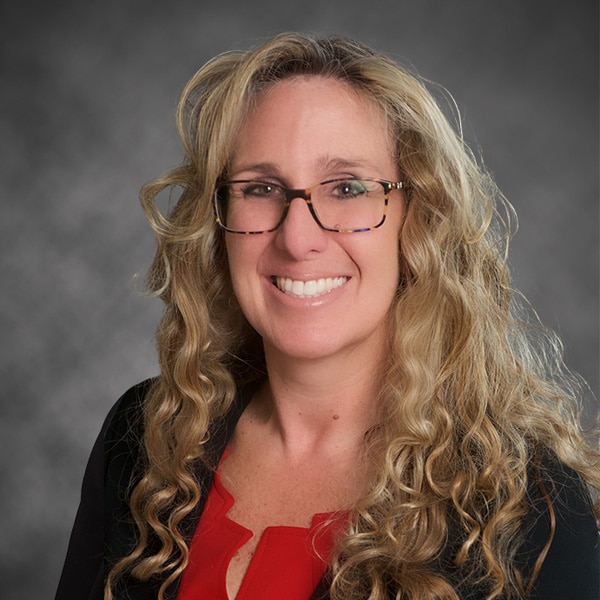
Cindy serves as the National Director, Philanthropic Advice, where she is responsible for introducing a comprehensive suite of sophisticated planning solutions tailored for Nonprofit and Institutional clients. Her role encompasses developing and implementing growth strategies, providing strategic planning advice, conducting governance and policy reviews, offering thought leadership, and delivering education on a range of critical topics. These topics include planned giving, fund accounting, charitable trusts, donor-advised funds, and other services that support Nonprofits with a particular focus on endowments, foundations, and pooled special needs trusts.
Understanding the importance of supporting clients in the impactful work they do, Cindy obtained her Chartered Special Needs Consultant (ChSNC®) designation. This designation enables her to assist people with special needs through planning ideas. She has gained in-depth knowledge of the best strategies and a dynamic understanding of areas such as disability regulations, special needs trusts, the ABLE Act, government benefits, Medicaid complexities, special education, estate and retirement planning, and tax implications.