
Key Questions: What Might Be Some of the Lasting Takeaways from the War in Iran?
The Key Wealth Institute is a team of highly experienced professionals representing various disciplines within wealth management who are dedicated to delivering timely insights and practical advice. From strategies designed to better manage your wealth, to guidance to help you better understand the world impacting your wealth, Key Wealth Institute provides proactive insights needed to navigate your financial journey.
Things are moving extremely fast these days, so by the time this article is published, it might be irrelevant. Nevertheless, amid the on-again/off-again nature of this war with Iran, we thought it might be useful to consider some of the longer-lasting implications once this conflict reaches some semblance of a conclusion, or at least a lasting truce is formed, whenever that may be.
Admittedly, the range of outcomes is still extraordinarily wide as the biggest determinants on the future direction of the global economy, both how long the war will last and how widespread it will be, remain uncertain. That said, the following are several longer-term implications that investors should consider.
1. Defense Stocks May Continue to Underperform.
Although it may sound counterintuitive, defense stocks significantly underperformed in the first month after the war began, proving once again that what might seem like a sure thing rarely is. Still, it is important to consider why this sure-fire bet failed to ignite investment portfolios once the war began, and whether defense stocks merit inclusion within one’s portfolio going forward.
In the months leading up to the war, defense stocks outperformed on the anticipation of global conflict and became richly valued, reaching a near-term top the first day missiles were fired, reminding us of the old investing adage: “Buy the rumor; sell the news.”
Looking ahead, defense stocks might recoup some of their underperformance over time, but it is also conceivable that they will continue to languish. Reason being: in this conflict (and also in the war in Ukraine), smaller weapon systems (e.g., drones) proved to be highly effective. Thus, in the future, defense spending, while still poised to grow, might be redirected to smaller and less expensive technologies, requiring legacy defense contractors to pivot away from “big ticket items” while also enabling smaller companies to attract greater attention and take market share.
Such a shift may not be an immediate threat to defense companies. But it could pressure profit margins over time, and thus we prefer owning aerospace and defense companies who are more diversified and less directly exposed to the vagaries of military spending dynamics.
2. The Price of Oil May Stay Higher for Longer.
Just as defense stocks rallied prior to the outbreak of the war, the price of oil also moved higher in anticipation of conflict. However, once the war began, the price of oil shot up even higher and while it sharply receded on news of a two-week ceasefire on the evening of April 7th, oil is still appreciably higher relative to pre-war levels, and so too are prices at the pump.
When considering commodity prices, we have previously noted that “the cure for higher prices is higher prices”, a reference to the fact that in most instances, there is generally a tipping point when commodity prices climb so high that they ultimately result in demand destruction causing prices to fall.
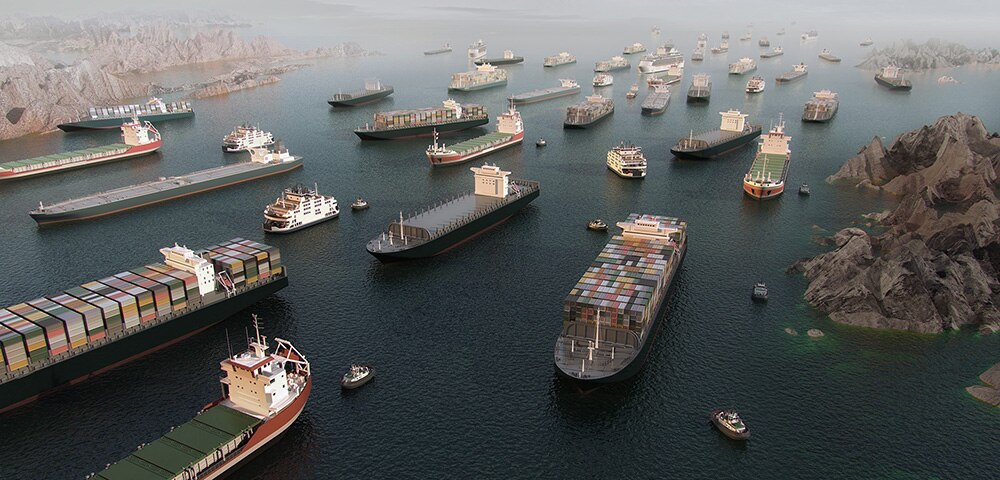
As such, should the ceasefire hold, it would not be a surprise to see the price of crude fall further in the near- to medium-term. Longer-term, however, we believe the price of oil will settle above pre-war levels and likely remain there for some time due to a “Hormuz premium” that will likely persist due to enduring concerns over shipping and an orderly flow of hydrocarbons and other important commodities.
3. Interest Rates May Also Remain Higher for Longer.
In most periods of geopolitical uncertainty, interest rates usually fall, pushing bond prices higher. During this conflict, however, interest rates rose, sending bond prices modestly lower. What is different today that could explain these moves?
For starters, budget deficits and the general level of government indebtedness are at the highest level in our nation’s history. And because wars traditionally necessitate more deficit spending and more debt, investors are right to nudge interest rates up.
In addition, just as the war triggered a spike in the price of oil, it also induced a spike in short-term in inflation expectations which, all else equal, has led to investors to believe that the Federal Reserve (and other Central Banks) may need to raise interest rates.
Whether or not the Fed follows through is difficult to say today, but the specter of higher interest rates from the Fed combined with lingered concerns over debt levels and deficits will likely cause interest rates to remain higher for longer, or at least until the labor market begins to weaken materially.
4. The US Dollar Rose During the War in Iran. Longer-Term, it May Weaken.
Unlike other conflicts, aside from its collaboration with Israel, the US has chosen to engage with Iran largely on its own. The result of this unilateralist approach has further strained relations with longtime allies, underscored by President Trump’s repeated refrain to exit NATO.
Such pursuits could abruptly shift, but in the short-term, they have resulted in a loss of US credibility abroad, which has the potential to lower the appetite for US assets over time.
To be clear, we continue to believe the US remains in an advantaged position because of the size, depth, and breadth of its financial markets, its dynamic and innovative workforce, and numerous other cultural, economic, and geographic advantages. Hence, we are not US dollar bears. However, because of our diminished reputation, combined with concerns over structurally higher deficits, the US dollar may face persistent headwinds.
5. In the Month-Long Conflict, Many Assets Fell, but Diversification Helped Cushion the Blow.
Once the war began, oil prices surged, stocks sank, and bond prices slipped. Gold prices also fell. In sum, there were few places to hide. That said, portfolios that were diversified generally fared better, particularly those that included exposure to real assets
Looking ahead, the fog of war is likely to remain dense, the economic path is likely to remain highly uncertain, and geopolitics will likely remain in a very fragile state for quite some time. And because the future is unknowable, investors will be well-served to adhere to their financial plan, avoid letting their emotions overcome their investment strategy, and ensure that their portfolios are adequately diversified for whatever comes next.