
Key Questions: What’s Behind the Back Up in Global Bond Yields?
The Key Wealth Institute is a team of highly experienced professionals representing various disciplines within wealth management who are dedicated to delivering timely insights and practical advice. From strategies designed to better manage your wealth, to guidance to help you better understand the world impacting your wealth, Key Wealth Institute provides proactive insights needed to navigate your financial journey.
For much of the last decade, global bond markets have operated in a world defined by extraordinarily low interest rates, subdued inflation, and central banks that stood ready to support financial markets whenever volatility emerged. Government bond yields across much of the developed world remained historically low, and in some countries, even negative. As we have noted in other publications, that world is changing.
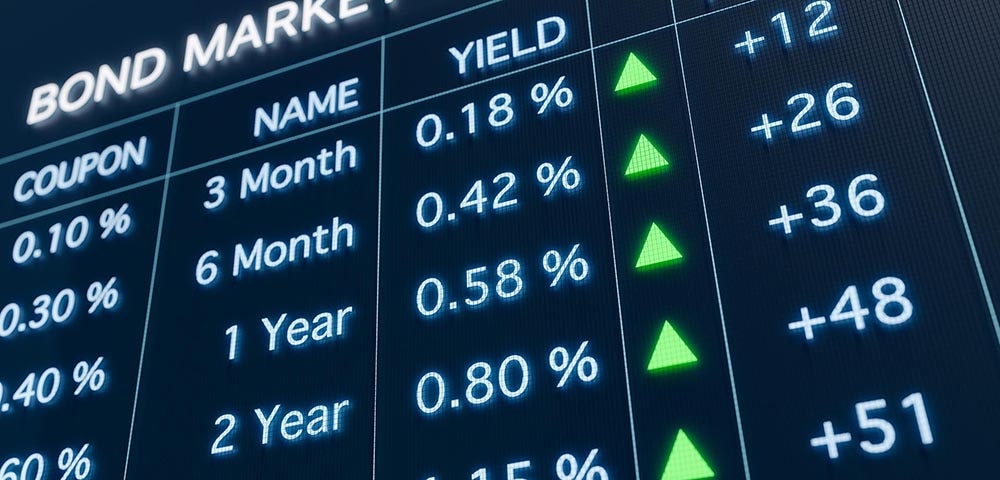
Over the past year, bond yields have been moving higher not only in the United States, but across many major developed economies. Yields in Japan, Europe, the United Kingdom, and elsewhere have risen alongside U.S. Treasury yields, creating a synchronized move higher in global borrowing costs.
The immediate explanation is straightforward: inflation remains above central bank targets in many regions, and economic growth has proven more resilient than expected. But the recent back up in global bond yields may reflect something larger than just the latest inflation report or central bank meeting.
Markets increasingly appear to be reassessing what the “normal” level of interest rates should look like in a world shaped by higher government debt levels, persistent fiscal deficits, persistent inflation, geopolitical uncertainty, and less central bank support for bond markets. In other words, this may not simply be a cyclical adjustment. It may represent a structural shift.
It’s Not Just About Central Banks Anymore
For years following the Global Financial Crisis and the pandemic, central banks played a significant role in suppressing long-term interest rates through quantitative easing programs and massive bond purchases. By buying government bonds in large quantities, central banks effectively helped suppress yields and dampen market volatility. Now, many of those same central banks are moving in the opposite direction.
Quantitative tightening programs, shrinking balance sheets, and reduced reinvestment activity are gradually removing a significant source of demand from global bond markets. At the same time, governments around the world continue issuing large amounts of debt to finance deficits, industrial policy initiatives, defense spending, and aging population needs. That combination matters.
As bond supply increases while central bank demand recedes, private investors must absorb a growing share of government issuance. To do so, investors may require higher yields as compensation. This dynamic helps explain why longer-term yields have remained elevated even during periods when markets expect central banks to eventually begin cutting short-term policy rates.
The Return of the Term Premium
One of the most important and least discussed developments in fixed income markets may be the return of the “term premium.” In simple terms, the term premium represents the additional compensation investors demand for holding longer-term bonds instead of rolling over shorter-term securities.
For years, that premium remained unusually compressed due to central bank intervention, low inflation expectations, and abundant global liquidity. Investors became accustomed to an environment where long-term yields remained relatively contained even as debt levels expanded. Today, markets may be reevaluating those assumptions.
Persistent inflation uncertainty, large fiscal deficits, rising debt issuance, geopolitical tensions, and questions surrounding future central bank credibility may all be contributing to a higher term premium globally. Investors are increasingly asking a simple question: If inflation proves more volatile and government borrowing continues expanding, should long-term interest rates really return to the ultra-low levels experienced during the post-financial crisis era? Markets appear less convinced.
Why Japan Matters
One of the more important developments in global fixed income markets lately has been the gradual rise in Japanese government bond yields. For years, Japan maintained extraordinarily low yields through aggressive monetary policy and yield curve control measures. That environment encouraged Japanese investors to see higher yields overseas; Japanese investors became major buyers of U.S. Treasuries and other global sovereign debt.
As Japanese yields move higher and domestic opportunities improve, global capital flows may begin to shift. That matters because Japanese investors have historically been among the largest foreign holders of U.S. government debt. Even modest changes in global allocation preferences can influence demand dynamics across international bond markets.
Why This Matters for Investors
Higher global bond yields create both challenges and opportunities. Higher borrowing costs can pressure consumer spending, housing markets, corporate refinancing activity, government budgets, and equity valuations. Companies and consumers that grew accustomed to exceptionally low financing costs are now operating in a different environment.
At the same time, fixed income investors are once again able to earn meaningful income from high-quality bonds after years of near-zero yields. That represents an important change.
For much of the past decade, investors often felt compelled to move further out on the risk spectrum in search of income. Today, higher-quality fixed income sectors once again offer more attractive yields and income potential. The adjustment, however, may not be smooth.
Markets are still trying to determine whether current yield levels represent temporary volatility tied to inflation and central bank policy or the early stages of a more durable repricing of global interest rates.
A Different Phase of the Cycle
The back up in global bond yields may ultimately reflect something larger than a normal market cycle. For years, investors operated in an environment heavily influenced by extraordinary monetary policy, abundant liquidity, and structurally low inflation. Financial markets adapted to that backdrop.
Today, investors may be entering a different phase, one shaped by higher debt levels, larger fiscal deficits, geopolitical fragmentation, and less central bank intervention. If that proves true, the implications could extend well beyond bond markets alone.
The question investors may increasingly need to ask is not simply where rates are headed next quarter, but whether the world is transitioning toward a structurally higher-rate environment than the one markets have become accustomed to over the last decade.
For more information, please contact your advisor.