Middle Market Sentiment Report: Why leaders are starting 2026 on the front foot

February 2026

<p>Middle Market Sentiment Report: Why leaders are starting 2026 on the front foot</p>

Middle market firms (about 200,000 companies with $10 million to $1 billion in annual revenue) employ roughly 48 million people, account for one-third of U.S. GDP, and help set the pace for the U.S. economy.1 When they lean into growth, the effects are broad.

KeyBank’s latest Middle Market Sentiment Survey polled 750 owners and senior executives in November and December 2025. The results point to a middle market entering 2026 on the front foot. Company outlooks are strong, driven by tighter operations, upgraded technology, and steadier teams.

Capital strategies are split between maintaining existing lines and adding capacity, with spending clustered around AI, core systems, and the workforce.

Fraud exposure is easing in aggregate but remains uneven, while M&A activity looks staggered, with buyers acting earlier and sellers later.

Below are six high-level takeaways from the data, each paired with a brief “deep cut” that examines a specific segment.

Download the full report for complete findings.

1. Stronger execution restores company confidence

Company confidence is rebuilding. After peaking at 78% in Q2 2024 and dipping to 72% in Q2 2025, the share of firms rating their 12-month outlook excellent or very good is back to 77%.

The recovery looks earned. Leaders point to what they control — cleaner processes, better use of technology, and steadier teams — as the drivers behind stronger pipelines and improving outlooks.

Improved operating efficiency, technology upgrades, and implementation of automation and AI are the top boosters of confidence, with talent attraction and retention close behind. This points to a shift from one-off cost actions to repeatable execution gains that build quarter over quarter.

Confidence is not blind to risk, but the posture is constructive. More firms are set up to turn plans into results.

Deep cut: Middle market companies in the construction industry posted a 13-point jump in positive outlook to 80 percent, returning to early 2024 confidence levels.

true
quote icon

We’re seeing optimism because middle market firms spent the last couple of years running leaner operations, upgrading core technology, and leveraging more automation and AI to take friction out of work. And now it’s showing up in the results, with improving margins, strong pipelines, and a much better talent market.

Ken Gavrity
President, KeyBank Commercial

2. U.S. economic outlook steadies as planning tempers risk

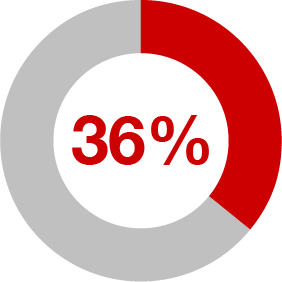
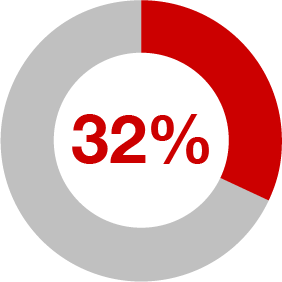
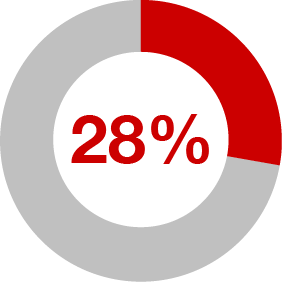
Economic optimism is holding. After a climb from 45% in Q2 2023 to 53% in Q2 2025, 52% now rate the next 12 months positively. The top concerns remain external: inflation, tariff and trade policy, labor costs, and interest rates.

Leaders are countering with what they can control. The gap between firm-level confidence and flatter macro views points to trust in execution. Efficiency gains, technology upgrades, steadier pipelines, and healthier supply chains and hiring conditions make plans more predictable.

The result is cautious resilience. Companies are positioned to press ahead when signals improve and protect margins if headwinds persist.

Deep cut: Among companies with $500 million to $1 billion in revenue, 69% report a positive economic outlook, up from 62% in Q2 2025 and 52% in Q4 2024.

Top issues currently having a negative impact on business operations

36%

Overall increase in inflation


36%

Tariffs/trade agreements


32%

Higher labor costs


28%

Higher interest rates

3. Capital access splits, but investment aims are aligned

Two stances are clear on capital access. A 57% majority maintains current capacity, while 43% are adding room through debt or equity.

Even so, investment goals line up. Firms are directing dollars to productivity and growth, with 53% prioritizing AI and technology expansion. Infrastructure and equipment upgrades, hiring and workforce development, and new product launches follow, showing balanced bets on systems, people, and pipelines.

For fresh equity, 65% turn to private equity. For additional leverage, 59% prefer relationship banks for pricing, integrated treasury, and ongoing advice.

Many are first funding efficiency from within, then adding outside capital to scale proven moves. The sequence preserves flexibility and keeps teams ready to act when demand improves.

Deep cut: Among companies with an excellent or very good outlook, 61% are seeking increased access to capital, compared with 34% among those with a fair or poor outlook.

true
quote icon

Middle market companies have never had more options when it comes to access to capital. Private equity and credit can fuel growth but can be costly. Commercial banks are crucial for optimizing working capital and offer senior debt at the lowest rates. Companies can mix providers, forming relationships with aligned interests to support their needs.

Brandon Nowac
Commercial Executive, KeyBank Commercial

4. Fraud risk improves at the top line, but BEC bites hard 

More firms avoided cybersecurity incidents this wave, with 35% reporting "no event," up from 28% in Q2 2025. That is progress, yet business email compromise (BEC) remains the primary pain point. Vendors and internal teams are still being targeted with believable payment-change requests and spoofed identities that turn small process misses into real losses.

Spending plans track confidence levels. Companies with excellent or very good outlooks are more likely to plan moderate or significant increases and rarely hold flat. Fair or poor peers lean toward small steps or no increase. The open question is which drives which. Stronger outlooks may free dollars, while better controls may reduce losses and lift outlooks.

In practice, leaders are pairing layered tools with human verification, dual approvals on payment changes, and tighter email authentication to shrink BEC risk.

Deep cut: Smaller middle market firms are bearing more of the brunt. Among companies with $10 to $25 million in revenue, 52% experienced a cybersecurity or fraud incident in the last 12 months, up 15 points from Q2 2025.


5. AI expansion shifts from pilots to practical lift

Middle market firms are shifting AI from trials to daily workflows. Seventy-five percent plan to automate employee tasks, with data analysis and process automation close behind.

The benefits are broadening. Productivity leads at 68%, while 59% expect sharper forecasting and 57% expect revenue gains.

Progress hinges on people as much as tools. Leaders flag coordination between humans and systems, job concerns, and reskilling as the primary hurdles. Clear roles, plain-language policies, and workflow redesign help reduce friction and speed adoption.

Maturity is still early. Only 6% say they are at their ideal AI state and 21% report being more than 75% of the way there. That leaves room for sequenced roadmaps, lightweight governance, and hands-on training that ties use cases to measurable outcomes. Teams that standardize what already works while piloting the next wave of use cases will compound gains.

Deep cut: Resistance to change is the top AI challenge for fair or poor outlook firms at 46%, compared with 28% among excellent or very good peers.

true
quote icon

Middle market firms investing in AI tell me the challenge isn’t the model, it’s the rollout. The best teams budget for training, write simple playbooks, and pair technologists with operators. They explain what changes and why, adjust incentives, and keep humans reviewing critical steps. That clarity reduces fear and keeps value creation on track.

Laurie Muller-Girard
Commercial Executive, KeyBank Commercial

6. M&A activity concentrates early while challenges diverge

Signals point to a busy first half of 2026 for acquisitions. Nearly half of firms plan to be on the buy-side early in the year, then activity eases in the second half before normalizing into 2027. Buyers appear to be adding capacity, talent, and adjacencies before diligence queues lengthen and pricing shifts.

Sell-side intent builds later in 2026 as processes mature, boards align, and valuation expectations settle.

The hurdle set looks different by side. Buyers point first to the cost and availability of financing, then to target selection and integration. The practical move is to line up funding paths early, pressure-test synergy math, and stage integration with clear 100-day plans.

Sellers say access and trust matter most. Momentum depends on banker and sponsor relationships, a concise narrative, and clean data rooms that reduce friction. Culture sits high for both sides, underscoring that fit and leadership continuity remain central to deal value.

Deep cut: Among companies with $500 million to $1 billion in annual revenue, 50% flagged financing cost and availability as a challenge, up 18 points from Q2 2025.

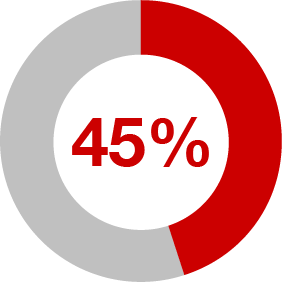
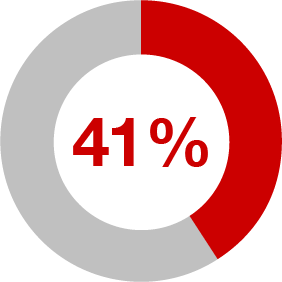
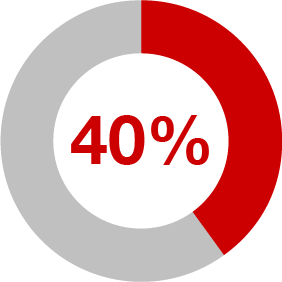
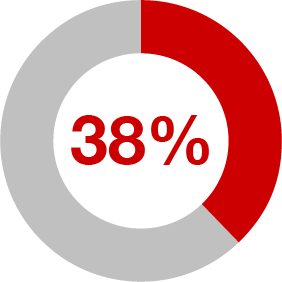
Top challenges when pursuing M&A opportunities (buy-side)


45%

Availability and cost of financing


Identifying the right target


Cultural considerations


Managing integration process/extracting strategies


true
quote icon

2026 is expected to be an active year for M&A, with large-cap transaction activity continuing and an expected meaningful pickup in mid-cap activity. While encouraging for sellers and buyers, we see continued buyer cautiousness, requiring sellers to reverse diligence business plans and market assessments to successfully navigate buyer due diligence processes.

Randy Paine
President, KeyBanc Capital Markets & Key Institutional Bank

Closing

The middle market enters 2026 with intent and clarity. Execution is improving, investment is focused, and leaders are setting up for disciplined growth.

For complete data, charts, and leadership perspective, download the full February 2026 Middle Market Sentiment Report.


If you want to turn these findings into a plan, contact us or visit key.com/commercial. Our commercial banking teams bring integrated solutions across capital raising, payments, liquidity, and cash flow. We pair industry expertise with practical guidance so you can act with confidence.

Whether you are tightening operations, funding expansion, or strengthening risk controls, we can help you evaluate options and structure the right approach.

KeyBank Member FDIC

“KeyBank Middle Market Business Sentiment Survey,” November 1 – December 15, 2025. KeyBank’s Middle Market Sentiment survey asked more than 700 owners and executives of businesses with $10 million to $1 billion in annual revenue about their outlook for the year, the challenges currently affecting their businesses, and their growth plans for 2026.

This is for general information purposes only and does not consider the specific investment objectives, financial situation, and particular needs of any individual person or entity. Information included was prepared based on survey respondents’ answers, information from business leaders considered to be reliable, and an express disclaimer of warranty, express or implied, as to such information’s accuracy or completeness. KeyBank does not provide legal advice.

Please read our complete KeyBanc Capital Markets disclosure statement.

Connect With Us

Find an Expert