Middle Market Snapshot: How private capital is reshaping the modern capital stack

June 2026

<p><b>Middle Market Snapshot: How private capital is reshaping the modern capital stack</b></p>

Middle market companies keep investing despite the noise.

While headlines on private credit have focused on high-profile defaults and concerns about late-cycle excess, the companies making capital decisions in this segment are leaning in, engaging with private capital partners, blending it with traditional bank financing, and using it to fund growth rather than to patch the balance sheet.

The findings come from KeyBank’s Middle Market Snapshot Survey, which polled 319 owners and senior executives in April 2026 across revenue bands from $25 million to $1 billion, all four major U.S. regions, and 10 key industries. Respondents included CEOs, CFOs, COOs, owners and founders, and finance and corporate development leaders — the people directly making capital decisions for businesses that, collectively, employ tens of millions of Americans and account for a meaningful share of U.S. GDP.

The results point to a market that is more active, more confident, and more strategic about private capital than recent headlines might suggest.

Below are 10 takeaways from the data, each paired with a brief deep cut that examines a specific segment.

1. Private capital is part of the strategic vocabulary

Eighty-one percent of middle market companies consider private capital at least sometimes when evaluating growth or strategic initiatives. Thirty-two percent consider it often or every time. Only 3% say they never do. The frequency holds across revenue bands, industries, ownership profiles, and executive roles, indicating that private capital has become a default consideration rather than a specialized tool for specific situations.

The middle market has moved past the question of whether private capital belongs in the conversation. The active question is when and with whom.

Deep cut: Frequency held consistently across every demographic cut, with consideration rates landing within a few points of the 81% baseline. Private capital has become a default option across the middle market rather than a niche tool tied to specific situations.

true
quote icon

The data shows how much more sophisticated middle market companies have become in how they think about capital. They are looking for the right structure to support growth, acquisitions, technology investment, and long-term flexibility. That’s exactly why we’ve built our banking model to deliver across a range of capital structures and providers, recognizing that solutions need to be tailored to fit the maturity and growth needs of their businesses.

Ken Gavrity
President, Key Commercial Bank

2. Nine in ten companies are engaging with private capital

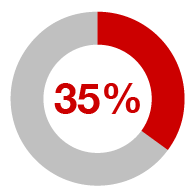
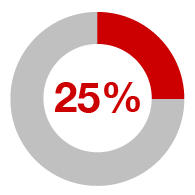
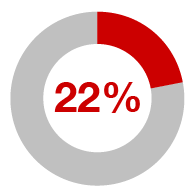
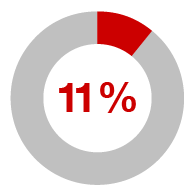
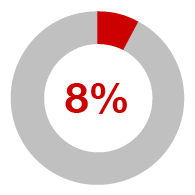
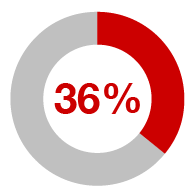
Eighty-nine percent of respondents are at some stage of evaluating or using private capital. Twenty-five percent are exploring options, 35% are actively engaging with providers, 22% are in a formal process, and 8% recently completed a transaction. Only 11% are not currently considering private capital.

The pipeline is loaded on the front end. Capital providers building relationships today are positioned for the formal processes already forming in the funnel. The shape of the data points to an active 12 to 24 months ahead for middle market deal flow.

Deep cut: Tech and industrials/manufacturing lead active engagement at 44% each, well above the 35% sample average. Both sectors are facing growth pressure and consolidation activity that pulls companies into capital conversations earlier in the planning cycle.

Which best describes your company’s current stage in evaluating or using private capital to support growth or strategic initiatives?

35%

Actively engaging with capital providers (meetings, early discussions)

25%

Exploring options and learning about potential capital partners

22%

In a formal process (diligence, term sheets, or negotiation)

11%

Not currently considering private capital

8%

Recently completed a transaction (past 24 months)

3. No single attribute dominates partner selection

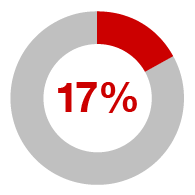
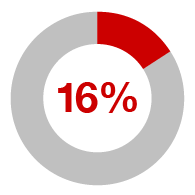
The factors that win deals are fragmented. Highest total leverage available (17%) and industry or operating expertise (17%) tied as the most common top-rank attribute in partner selection. Lowest all-in cost of capital followed at 16%, with flexibility to support future acquisitions at 13%. Industry expertise led on top-three mentions at 49%, signaling that companies want partners who understand their business beyond writing the check.

The fragmentation means there is no clear-cut right answer for capital providers. Different segments value different things, and positioning has to match the buyer’s posture. A single pitch will not win across the board.

Deep cut: Healthcare ranks flexibility for future acquisitions at 54% as its top consideration, while tech anchors on certainty of execution at 57%. Each industry’s preferences are a lens into its strategic playbook.

true
quote icon

Capital decisions aren’t won on a single dimension. We talk to companies about flexibility, structure, and how a holistic lending solution fits their long-term plan. By partnering with private capital, we can be creative on where we attach, what we provide, and how we price the risk we’re taking. That positioning beats competing on any one number.

Chris Picardi
Colorado Market President, Key Commercial Bank

4. The biggest delays sit inside the company

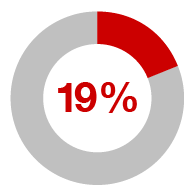
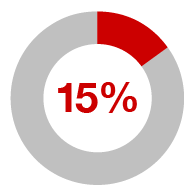
When asked what created the greatest challenge or delay in their most recent financing process, respondents pointed inward. Internal alignment among owners and board members tied with diligence burden on internal teams at 19% each. Intercreditor and documentation delays followed at 15%. Late changes to deal terms came in at 8%, followed by cultural alignment at 5%. Nearly a quarter of respondents (23%) reported no meaningful challenges or delays.

Deep cut: CEOs cite intercreditor and documentation delays at 35%, more than twice the 15% baseline. Executive bandwidth functions as a real diligence constraint, and the market might move at the speed of the company's internal coordination rather than the lender’s.

In your most recent financing or transaction process, what created the greatest challenge or delay?

19%

Internal alignment among owners or board members

19%

Diligence burden on internal teams

15%

Intercreditor or documentation delays

5. Capital decisions adjust to the macro, not pause

Thirty-nine percent of respondents report moderate or significant impact from the current macroeconomic and policy environment on their capital decisions. The dominant response is adjustment where companies are modifying timing, structure, or size of plans. Only 11% have paused, delayed, or cancelled plans outright. Sixteen percent are moving faster because of conditions, treating the environment as an opportunity rather than a headwind.

Middle market companies are managing uncertainty through deal design and contingency planning. Operating in this environment has become the steady state for capital decisions, and leaders are positioning to act when signals improve.

Deep cut: Among $250M+ companies, 53% report moderate or significant macro impact, compared with the 39% sample average. Larger capital stacks carry more interest rate exposure and counterparty dependencies, which can amplify sensitivity to the environment.

true
quote icon

The headlines don’t fully reflect what we’re seeing in the middle market. Activity remains strong across both bank and private capital channels, with healthy levels of deployment and continued demand from clients. The data underscores a market that is active, resilient, and evolving — where the overall opportunity is broader than any single narrative.

Brandon Nowac
Commercial Executive, KeyBank Commercial

6. Confidence in current partner mixes runs high

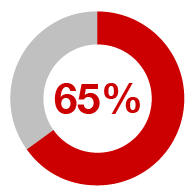
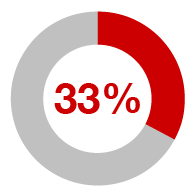
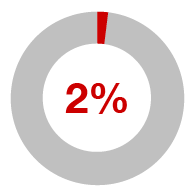
Sixty-five percent of middle market leaders rate confidence in their current bank and private capital partner mix at 6 or 7 out of 7. Only 8% rate below 5. The result holds across revenue, industry, ownership profile, and executive role as no segment is structurally dissatisfied with the partnerships it has built.

The 27% sitting at a 5 is the contested middle. Respondents in the moderate band could open to a better fit when one surfaces, and capital providers should treat moderate ratings as active relationship risk warranting attention.

Deep cut: Companies that are majority PE-owned (independent sponsor) rated confidence in their current lending partners at a 4 or below 17% of the time — 11 points higher than any other ownership profile.

How confident are you that your current mix of bank and private capital partners can support your company’s long-term growth?

Rated on 7-point scale, 1 = Not Confident, 7 = Confident

65%

High confidence (6-7)

33%

Moderate confidence (4-5)

2%

Low confidence (1-3)

7. Flexibility is the gap in current capital structures

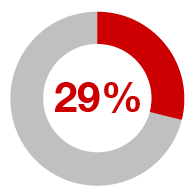
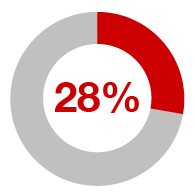
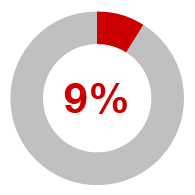
Twenty-nine percent of respondents report no gaps in their current capital structure. Among the 71% who identify a shortfall, limited flexibility for growth initiatives leads at 28%. Insufficient access to capital trails at 17%, with cost of capital constraints at 16% and misalignment with ownership or governance at 9%.

Capital is widely available in the middle market. The harder problem is assembling the right capital at the right moment on the right terms. Existing products can fall short of the flexibility growing companies need, especially those carrying acquisition agendas or technology investment plans requiring staged commitments.

Deep cut: Public companies cite flexibility constraints at 41%, the highest of any ownership profile, while Minority PE-owned firms report governance misalignment at 22% — well above the 9% baseline. Solutions need to match the ownership structure, not the segment average.

Where does your current capital structure fall short in supporting your company’s next phase of growth?

29%

No gaps — fully aligned 


28%

Limited flexibility for growth initiatives 


17%

Insufficient access to capital 


16%

Cost of capital constraints 

9%

Misalignment with ownership or governance

8. Growth funds the capital agenda

Among companies seeking private capital, funding growth initiatives (28%) and investing in technology, automation, or AI (26%) lead the primary objectives. Acquisitions follow at 18%. Balance sheet recapitalization comes in at 16%.

The technology and AI finding is a notable shift. Companies are framing AI investment as a financeable strategic bet rather than an expense to absorb quietly, which expands the addressable market for capital providers focused on growth.

Deep cut: Among the 11% not currently considering private capital, 77% cite sufficient internal capital as the reason instead of market concerns or board friction. The pool of philosophical objectors is essentially absent from the market.

true
quote icon

The story in private capital is decisively offensive. Growth and acquisitions dominate, while balance sheet repair takes a back seat. The lower middle market is reacting opportunistically while larger companies continue to execute against structured, growth-driven timelines.

Mike McMahon
Upstate New York Market President, Key Commercial Bank

9. Velocity outranks access as the prized outcome

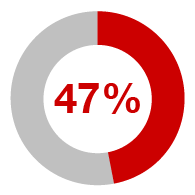
Forty-seven percent of respondents cite the ability to accelerate growth initiatives as a top-two outcome of working with private capital. Access to capital beyond traditional bank financing follows at 36%, with support for acquisitions or market expansion at 35%.

As capital becomes more commoditized, the harder-to-replicate value is what a private capital partner does to compress timelines and accelerate decisions. The trade-offs are real. Higher cost (40%), greater complexity (38%), and increased performance pressure (38%) lead the challenges list, but loss of control at 30% sits well below the operational concerns. The middle market has made peace with the ownership question and is more focused on the operating terms of the partnership.

Deep cut: CEOs and presidents rank access to capital beyond traditional bank financing at 51% — 15 points above the full sample. The CEO perspective sits apart from finance roles, suggesting an under-served audience in private capital communications.

Based on your experience, what are the most valuable outcomes of working with private capital?

Respondents selected their top two. Base: 293 with private capital experience.

47%

Ability to accelerate growth initiatives

36%

Access to capital beyond traditional bank financing

35%

Support for acquisitions or market expansion

29%

Strategic guidance and governance support

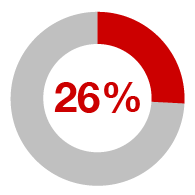
26%

Improved financial discipline and reporting

26%

Lowest all-in cost of capital

10. M&A is emerging as a central use case for private capital

Acquisition opportunity ranks as the second-most-common trigger for considering private capital at 22%, behind only growth investment. Pursuing an acquisition or M&A opportunity is also the third-most-cited primary objective for companies actively seeking private capital, at 18%. Looking ahead, 40% of respondents rank pursuing M&A supported by private capital among their top three capital priorities for the next 12 months.

The pattern points to a market where private capital and deal activity are increasingly intertwined. Companies are using private capital to both fund organic growth and finance the acquisitions that accelerate it. For sponsors, lenders, and advisors, the implication is that capital partnerships and M&A advisory are converging conversations.

Deep cut: Healthcare and business services lead industry interest in M&A-supported private capital, with healthcare ranking flexibility for future acquisitions at 54% as its top consideration in partner selection. 

true
quote icon

Even with an uncertain geopolitical and inflation backdrop, we are seeing increasing middle market activity and a more active IPO calendar. The second half of 2026 looks to be set up for more M&A activity driven by not just large-cap transactions. Many private equity firms are actively preparing to launch transactions sooner rather than later to try and get into the best positioning with buyers.

Randy Paine
President, Key Institutional Bank & KeyBanc Capital Markets

Looking ahead

Stability is the top priority for 29% of respondents, who said maintaining their current capital structure will be their main focus over the next 12 months. That also means 71% are prioritizing action, with meaningful interest in private credit alongside bank financing (14%), exploring PE partnerships (15%), and refinancing existing capital (13%).

This tells us the year ahead points to a multi-pronged capital agenda for the middle market. Few companies are planning to stand still, and few are concentrating their planning around a single dominant move. Capital providers should expect to participate in layered conversations with the same companies as debt and equity, traditional and private run in parallel.

For complete data and additional perspective from KeyBank leadership, download the full report.

Connect with KeyBank

If you would like to turn these findings into a plan, contact us or visit key.com/commercial. Our commercial banking teams bring integrated solutions across capital raising, payments, liquidity, and cash flow. We pair industry expertise with practical guidance so you can act with confidence.

Whether you are funding expansion, evaluating private capital partners, or restructuring existing capacity, we can help you assess options and structure the right approach.

“KeyBank Middle Market Snapshot Survey,” April 16 – April 24, 2026. KeyBank’s Middle Market Snapshot surveyed more than 300 owners and executives of businesses with $25 million to $1 billion in annual revenue.

This is for general information purposes only and does not consider the specific investment objectives, financial situation, and particular needs of any individual person or entity. Information included was prepared based on survey respondents’ answers, information from business leaders considered to be reliable, and an express disclaimer of warranty, express or implied, as to such information’s accuracy or completeness. KeyBank does not provide legal advice.

KeyBanc Capital Markets Inc., Member FINRA/SIPC ("KBCMI"), and KeyBank National Association (“KeyBank N.A.”) are separate, but affiliated companies. Securities products and services are offered by KeyBanc Capital Markets Inc. and its licensed securities representatives. Banking products and services are offered by KeyBank N.A.

Connect With Us

Find an Expert