Middle Market Snapshot: The war for talent is now the war for top talent

November 2026

<p>Middle Market Snapshot: The war for talent is now the war for top talent</p>

For years, the story about middle market labor has been scarcity. Open roles that stayed open, searches that stretched for months, wage pressure that would not let up. The latest data tells a more specific story.

KeyBank's Middle Market Snapshot surveyed 350 financial decision-makers at companies with $10 million to $1 billion in annual revenue in September 2026. Respondents span manufacturing, healthcare, business and professional services, retail, construction, and other sectors across four U.S. regions, and include business owners, C-suite executives, and senior finance leaders.

Most firms now describe their workforce as right-sized, and hiring is called easy more than twice as often as difficult. The pressure has narrowed into specific roles that stay stubbornly hard to fill and labor costs that have yet to reverse.

Below are seven takeaways from the data, each paired with a brief "deep cut" that examines a specific segment.


1. The workforce picture has stabilized

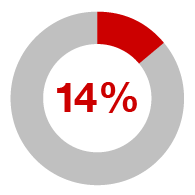
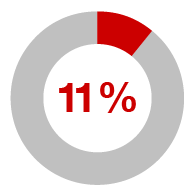
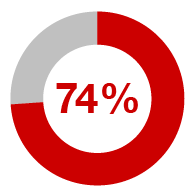
Three in four middle market firms say their current workforce is about right for their business needs. The remaining quarter is almost evenly split between companies that need to hire and companies carrying more people than conditions require.

That steadiness extends backward. Compared with two years ago, 35% of firms say workforce challenges have eased, against 21% who say they intensified. The largest group, 44%, reports no real change at all.

After several years of acute disruption, the middle market has arrived somewhere closer to equilibrium.

Deep cut: Among firms with primarily hourly or production-based roles, 21% report insufficient staffing, compared with 5% of firms with mostly salaried or professional roles.


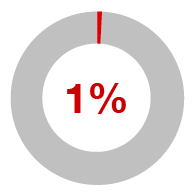
How would you describe the size of your current workforce relative to your current business needs?

74%

Right-sized

14%

Insufficient, need to hire

11%

Larger than needed

1%

Not sure

2. Hiring got easier, and the hard roles stayed hard

Nearly six in 10 firms describe filling job openings over the past year as easy, against roughly one in four who found it difficult. Only 2% had no openings at all.

The role-level picture is less forgiving. Skilled trades and technical production remain the hardest positions to fill, cited by 35% of firms, followed by IT at 29%, with middle management and entry-level labor each at 25%.

The broad shortage appears to have narrowed into a set of targeted gaps. Firms are filling seats more easily while still competing hard for specific capabilities.

Deep cut: Firms with $100 million to $250 million in revenue report the most hiring difficulty at 34%, 11 points above the market. Operations and supply chain roles are a distinct pressure point for firms with 100 to 249 employees, cited by 44% against 22% overall.

true
quote icon

I'd be cautious about saying we've turned the corner. Hiring looks easier in the aggregate, but the right talent is still top of mind for the owners I sit across from. Skilled trades and technical roles stay hard to fill. The war for talent has narrowed into a war for top talent, and companies are still competing hard for the people who matter most.

Ryan Ferris
Commercial Leader
Key Commercial Bank

3. No single pressure dominates

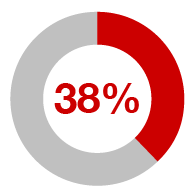
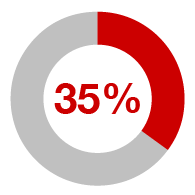
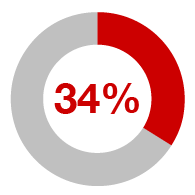
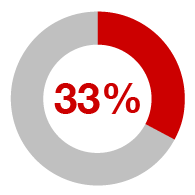
Six workforce pressures sit within five points of one another. Wage and compensation pressure leads at 38%, followed by benefits and healthcare costs and skills gaps at 35%, retention and candidate availability at 34%, and employee engagement at 33%.

Firms are managing an interconnected slate rather than one defining problem, which makes prioritizing harder than a ranked list suggests.

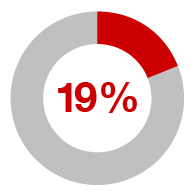
One pressure stands apart. Retirements and loss of experienced workers register at 19%, a striking gap given how much attention workforce aging typically receives.

Deep cut: Wage pressure concentrates among firms with $100 million to $250 million in revenue, cited by 61% against 38% overall. Northeast firms feel benefits and healthcare costs most acutely at 48%.

Which workforce pressures are having the greatest impact on your business today?

38%

Wage and compensation pressure

35%

Benefits and healthcare costs

35%

Skills gaps

34%

Retaining existing employees

34%

Difficulty finding qualified candidates

33%

Employee engagement and productivity

19%

Retirements / loss of experience

4. Labor costs rose for most firms and fell for almost none

More than half (58%) of firms report higher labor costs over the past 12 months, most commonly an increase between 6% and 15%. Just 1% report any decrease.

Those increases are reaching the bottom line. Ninety percent of firms report at least some margin pressure from labor costs, and a majority describe that pressure as moderate or greater. Only 9% report none at all.

Whatever else has steadied in the workforce picture, cost has not reversed. Most firms are absorbing increases that run well above general inflation.

Deep cut: Healthcare firms report the most acute margin pressure, with 25% describing it as a great deal against 10% overall.

true
quote icon

Companies are still having to pay up. What's changed is how deliberate they are about it. Post-COVID it was an arms race to find any person. Now it's an arms race to find the right person, someone who's going to have longevity. Firms would rather put together a compelling package once than keep cycling through the same role.

Joshua Lyons
Commercial Leader
Key Commercial Bank

5. Pressure is accelerating investment more often than delaying growth

Half of firms (51%) expect their workforce to grow over the next 12 months, and 8% expect it to shrink. The rest plan to hold steady.

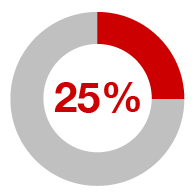
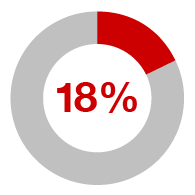
Where workforce pressure reaches long-term planning, the most common effect is faster technology and automation investment at 34%, cited nearly twice as often as delaying or scaling back expansion at 18%. Nearly a third of firms, 32%, report no meaningful effect on long-term plans at all.

Workforce constraints appear to be reshaping how middle market firms grow more than whether they grow.

Deep cut: Private equity and investor-backed firms are accelerating technology investment hardest, at 54% against 34% overall. Among other privately held firms, 47% report no meaningful effect on their long-term plans.

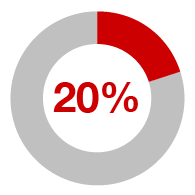
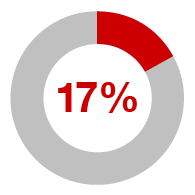
Are workforce pressures affecting your company's longer-term growth plans in any of the following ways?

34%

Faster technology / automation investment

25%

Changing products, services, or markets

20%

Changing operations or facility locations

18%

Delaying or scaling back expansion

17%

Changing ownership or succession timing

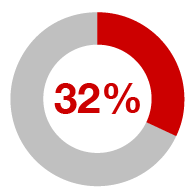
32%

No meaningful effect on long-term plans

6. Firms pay first, then train, then automate

The most common response to workforce pressure remains compensation. Some 44% of firms increased wages or pay over the past year. Training and upskilling investment follows at 39%, automation and technology at 30%, and expanded benefits or flexible work at 28%.

The sequence suggests firms are buying stability in the near term while building capability for the longer one. Only 10% report taking none of these actions.

Deep cut: Firms with $100 million to $250 million in revenue lead on training investment at 61%, 22 points above the market. Business and professional services firms are the most likely to formalize succession and knowledge transfer plans, at 38% against 18% overall.

true
quote icon

Middle market leaders are responding to a unique labor market with a mix of investment in people and technology. Nearly half are raising pay, close to four in ten are investing in their people’s skills, and three in ten are turning to automation and technology. The companies that pull ahead will be the ones that do all three: attract talent, grow it, and free it up for higher-value work.

Brandon Nowac
Commercial Executive
Key Commercial Bank

7. Seven in 10 firms see value in outside help

Most firms identify at least one form of external support that would help them address workforce challenges. Strategic workforce planning leads at 37%, followed by financing for automation and equipment at 30%, workforce data and benchmarks at 27%, and treasury and payroll tools at 27%.

Only 14% say they handle workforce challenges entirely on their own.

Deep cut: C-suite respondents value strategic workforce planning considerably more than the market overall, 53% against 37%. Publicly traded firms show the strongest interest in succession and ownership guidance at 39%.

true
quote icon

The most valuable banking relationships bring perspective, ideas, and solutions that help companies address not only their financial priorities, but also the underlying operational challenges that constrain growth and performance. The best bankers understand the business behind the balance sheet and use that understanding to help clients anticipate challenges, identify opportunities, and make better decisions.

Laurie Muller-Girard
Commercial Executive
Key Commercial Bank

Looking ahead

The middle market enters the next year with its workforce steadier than it has been since before the pandemic and its costs still climbing. Firms are responding by paying to hold the teams they have, training for the capabilities they need, and automating the roles that have always been hardest to keep filled.

The competition that remains is narrower and sharper. For most companies, the challenge is attracting the specific people who move the business forward.

For complete data, charts, and segment detail, download the full Middle Market Snapshot report.

Connect with KeyBank

If you want to turn these findings into a plan, contact a KeyBank relationship manager or visit key.com/commercial. Our commercial banking teams bring integrated solutions across equipment finance, payments, liquidity, and cash flow, paired with industry expertise and practical guidance.

Whether you are investing in automation, restructuring your workforce, or planning for succession, we can help you evaluate options and structure the right approach.

"KeyBank Middle Market Snapshot Survey," September 14–19, 2026. KeyBank surveyed 350 financial decision-makers at businesses with $10 million to $1 billion in annual revenue.

This is for general information purposes only and does not consider the specific investment objectives, financial situation, and particular needs of any individual person or entity. Information included was prepared based on survey respondents’ answers, information from business leaders considered to be reliable, and an express disclaimer of warranty, express or implied, as to such information’s accuracy or completeness. KeyBank does not provide legal advice.

KeyBanc Capital Markets Inc., Member FINRA/SIPC ("KBCMI"), and KeyBank National Association (“KeyBank N.A.”) are separate, but affiliated companies. Securities products and services are offered by KeyBanc Capital Markets Inc. and its licensed securities representatives. Banking products and services are offered by KeyBank N.A.

Connect With Us

Find an Expert