Middle Market Sentiment Report: Why leaders trust their own four walls more than the macro

August 2026

<p><b>Middle Market Sentiment Report: Why leaders trust their own four walls more than the macro</b></p>

Middle market firms (about 200,000 companies with $10 million to $1 billion in annual revenue) employ roughly 48 million people, account for one-third of U.S. GDP, and help set the pace for the U.S. economy.1 When they stay confident through difficult conditions, it says something about where growth comes from.

KeyBank's latest Middle Market Sentiment Survey polled 731 owners and senior executives in April and May 2026. The results point to a middle market that trusts its own four walls more than the headlines. Company outlooks sit near a two-year high while economic views stay flat, and leaders credit the difference to what they control: efficiency, technology, and AI.

Capital seeking is rising, with dollars aimed at AI, infrastructure, workforce, and security. Cyber threats remain widespread, and firms keep investing to protect the productivity gains they are creating. M&A appetite builds steadily toward 2028.

Below are seven high-level takeaways from the data, each paired with a brief “deep cut” that examines a specific segment.

Download the full report for complete findings.

1. Company confidence holds because firms built it themselves

Company confidence remains resilient as 77% of leaders rate their 12-month outlook as excellent or very good, up 5 points from a year ago and holding the highest level since May 2024.

The resilience looks earned. Leaders continue to point to what they control, sharper operating efficiency, upgraded technology, and AI implementation, as the foundation of their outlook. External conditions barely register on the list.

That distinction suggests firms are committing to plans and building confidence through execution rather than waiting for the economy to improve.

Deep cut: Healthcare firms posted a 9-point jump in positive company outlook since Q4 2025, reaching 78%, while retail leads all industries at 86%.

true
quote icon

If you think about what's really driving the middle market, it's execution. Nearly eight in ten leaders are bullish on their own company while the economic read is about half. And when you sit across the table from these operators, you understand why. They point to efficiency gains, technology, AI, talent. Things they control. These businesses are resilient through cycles, and the disciplined ones build confidence that can adapt to the macro environment.

Ken Gavrity
President, Key Commercial Bank

2. Economic views hold steady, and leaders plan around them

Economic optimism held at 51%, essentially unchanged for four consecutive waves. Underneath, more firms cluster at the negative end, with the net reading easing to 23%.

The gap between company confidence and economic confidence now spans 26 points, and it has become a defining feature of the middle market. Leaders are pairing growth plans with tighter operating discipline rather than counting on conditions to improve.

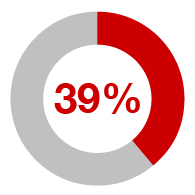
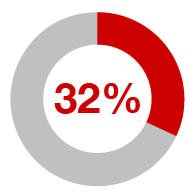
Inflation retook the top spot among current pressures at 39%, moving ahead of tariffs, which eased to 32%. Geopolitical concern rose five points, one of the few significant increases this wave.

Deep cut: Companies with $500 million to $1 billion in revenue dropped 23 points on the economy, from 69% to 46%, even as their company confidence held at 80%. The largest firms show the confidence gap at its widest.

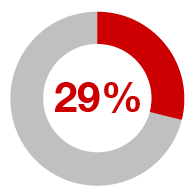
Top issues currently having a negative impact on business operations

39%

Overall increase in inflation

32%

Tariffs / trade agreements

29%

Higher labor costs

29%

Higher interest rates

3. A majority of firms are now seeking capital

The capital posture flipped this wave. Fifty-two percent of leaders say their companies are pursuing greater access to capital, up from 43% in late 2025, when a majority was content to maintain.

The shift is concentrated among confident firms, where 56% are building capacity, and two-thirds plan to increase funding to invest in or expand the business. Appetite appears tied to opportunity rather than stress.

Firms still fund flexibility from the inside first. Asked how they free up cash, leaders across every outlook cite cash flow management and cost reduction ahead of any external lever, while selling assets stays rare.

Deep cut: Capital seeking skews to the South at 59% and to firms with $250 million to $1 billion in revenue at 60%, while manufacturing and the Midwest lean toward maintaining current levels.

true
quote icon

Outlook often reveals itself through investment planning. The most confident companies I speak with can articulate exactly what next year's investment dollars will fund — technology upgrades, new hires, product development, market expansion, and other growth initiatives. These are often offensive investments designed to accelerate performance and capture opportunity. More cautious organizations can be just as clear about what those investments are intended to protect — margins, resilience, market position, or operational stability. Both reflect a deliberate strategy. What the data consistently shows is that sentiment drives the distinction, and companies that understand their posture make faster, more decisive decisions than those still trying to determine which path they're on.

Laurie Muller-Girard
Commercial Executive, Key Commercial Bank

4. The capital stack is rebalancing toward relationship banks

Commercial lenders now lead the list of outside capital sources at 57%, as reliance on private equity fell 9 points and hedge fund use declined as well.

The shift suggests firms are prioritizing predictable terms, integrated treasury, and ongoing advice as they fund technology and workforce plans. Alternative capital still plays a meaningful role, but the center of gravity moved toward relationships this wave.

Deployment priorities held firm. AI and technology expansion leads planned uses at 54%, first for both capital seekers and maintainers, followed by infrastructure, hiring, and cybersecurity.

Deep cut: Appetite for AI and technology deployment is strongest among technology firms at 68%. Firms with weaker outlooks direct more capital toward debt reduction, roughly double the overall rate, a reminder that the same dollars fund progress in one camp and resilience in the other.

true
quote icon

More than half of middle market companies are pursuing incremental capital this year to invest in their businesses. They are clearly turning first to their core relationship bank to provide ideas and options on an optimal capital structure and an advisor who brings guidance on working capital, risk management, and M&A. It is all about the long-term relationship instead of a specific event.

Brandon Nowac
Commercial Executive, Key Commercial Bank

5. AI has moved from the perimeter to core operations

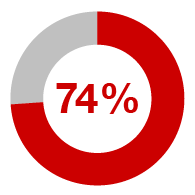
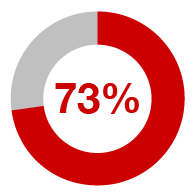
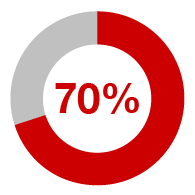
A year ago, cybersecurity led AI expansion plans. This wave, data analysis at 74%, employee task automation at 73%, and process automation at 70% top the list. AI is graduating from a defensive tool into operating infrastructure.

The expected payoff is consolidating around operations. Productivity leads at 71%, followed by decision-making and forecasting, well ahead of sales gains. Firms appear to be grounding AI plans in outcomes they can measure.

Progress is real. Seventy percent of firms say they are at least halfway to their ideal AI state, and the share still in early stages fell significantly to 9%. Very few call themselves finished, which leaves the work ahead in data, workflows, and change management.

The hardest part remains human. Leaders cite collaboration between AI systems and workers, reskilling, and job security concerns as the top workforce challenges, and 31% anticipate cutting legacy roles.

Deep cut: Resistance to change is the top AI barrier among firms with fair or poor outlooks at 44%, compared with 24% among confident peers, suggesting the obstacle shifts from governance to culture as confidence falls.


How companies plan to expand AI within the organization

74%

Data analysis


73%

Automating employee tasks


70%

Business process automation


6. Firms are protecting the gains they are creating

Cybersecurity threats remain widespread, and firms keep investing in response. Ninety-two percent plan some increase in cybersecurity spending over the next 12 months, with 65% planning moderate or significant increases.

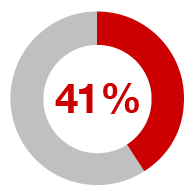
Business email compromise remains the top incident, experienced by 41% of firms in the past year, up from 36%. Impersonation attacks target process gaps rather than systems, which keeps verification discipline at the center of any defense.

The tools list is mature and stable, anchored by multi-factor authentication and anti-virus protection. The behavioral controls that stop payment redirection, dual authorization, and training remain the clearest underused defense in the middle market.

Deep cut: Business email compromise concentrates in technology at 50% and business and professional services at 49%. Meanwhile, a quarter of fair or poor outlook firms plan no cybersecurity increase at all, compared with 7% of confident firms.

Cybersecurity or fraud occurrences in the past 12 months

41%

Business email / text compromise

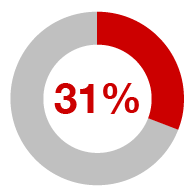
31%

Data corruption

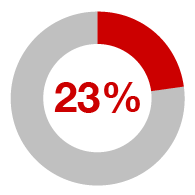
23%

Check fraud

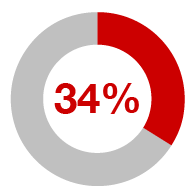
34%

Did not experience any incident

7. Buyers are patient, not absent

Buy-side M&A intent starts at 32% for the second half of 2026 and climbs to 43% by 2028, while sell-side interest holds near 20% throughout. Near-term appetite eased from Q4 2025, but the longer horizon held firm.

The pattern points to deferral rather than retreat. Buyers appear to be extending their planning window, positioning for acquisitions once conditions and valuations clarify. For firms with the confidence and the means, dealmaking remains the fastest route to technology, talent, and scale.

The challenge set is familiar. Buyers cite financing cost and availability first at 44%, while sellers point to relationships at 53%. Cultural fit ranks high for both sides, a reminder that deals clearing financing and diligence can still fail on chemistry.

Deep cut: Buy-side intent concentrates among confident firms, where 48% anticipate activity by 2028, and among CFOs at 55%. Technology leads all industries across every time period.

true
quote icon

It's a volatile environment, no question, but our clients remain confident in their own businesses, and you see that in the deal pipeline. Buy-side intent builds steadily through 2028. What that tells me is buyers are extending the timeline and setting higher bars for transactions, not exiting the market. Dealmaking is not without execution risk, and buyers know it, which is why financing and integration planning matter more than ever. Sellers should use the runway to firm up their narrative and their numbers. When conditions clarify, this market will move quickly.

Randy Paine
President, KeyBanc Capital Markets & Key Institutional Bank

Closing

The middle market moves through 2026 trusting what it has built. Confidence rests on execution rather than conditions, capital is flowing toward technology and workforce plans, and leaders are protecting the gains as they scale them.

For complete data, charts, and leadership perspective, download the full Middle Market Sentiment Report.

If you want to turn these findings into a plan, contact a Key Commercial Bank relationship manager. Our commercial banking teams bring integrated solutions across capital raising, payments, liquidity, and cash flow. We pair industry expertise with practical guidance so you can act with confidence.

Whether you are tightening operations, funding expansion, or strengthening risk controls, we can help you evaluate options and structure the right approach.

1 Year-End 2025 Middle Market Indicator, National Center for the Middle Market.

“KeyBank Middle Market Sentiment Survey,” April 28 – May 27, 2026. KeyBank’s Middle Market Sentiment surveyed more than 700 owners and executives of businesses with $10 million to $1 billion in annual revenue.

This is for general information purposes only and does not consider the specific investment objectives, financial situation, and particular needs of any individual person or entity. Information included was prepared based on survey respondents’ answers, information from business leaders considered to be reliable, and an express disclaimer of warranty, express or implied, as to such information’s accuracy or completeness. KeyBank does not provide legal advice.

KeyBanc Capital Markets Inc., Member FINRA/SIPC ("KBCMI"), and KeyBank National Association (“KeyBank N.A.”) are separate, but affiliated companies. Securities products and services are offered by KeyBanc Capital Markets Inc. and its licensed securities representatives. Banking products and services are offered by KeyBank N.A.

Connect With Us

Find an Expert