Text message fraud: Defending your business against smishing
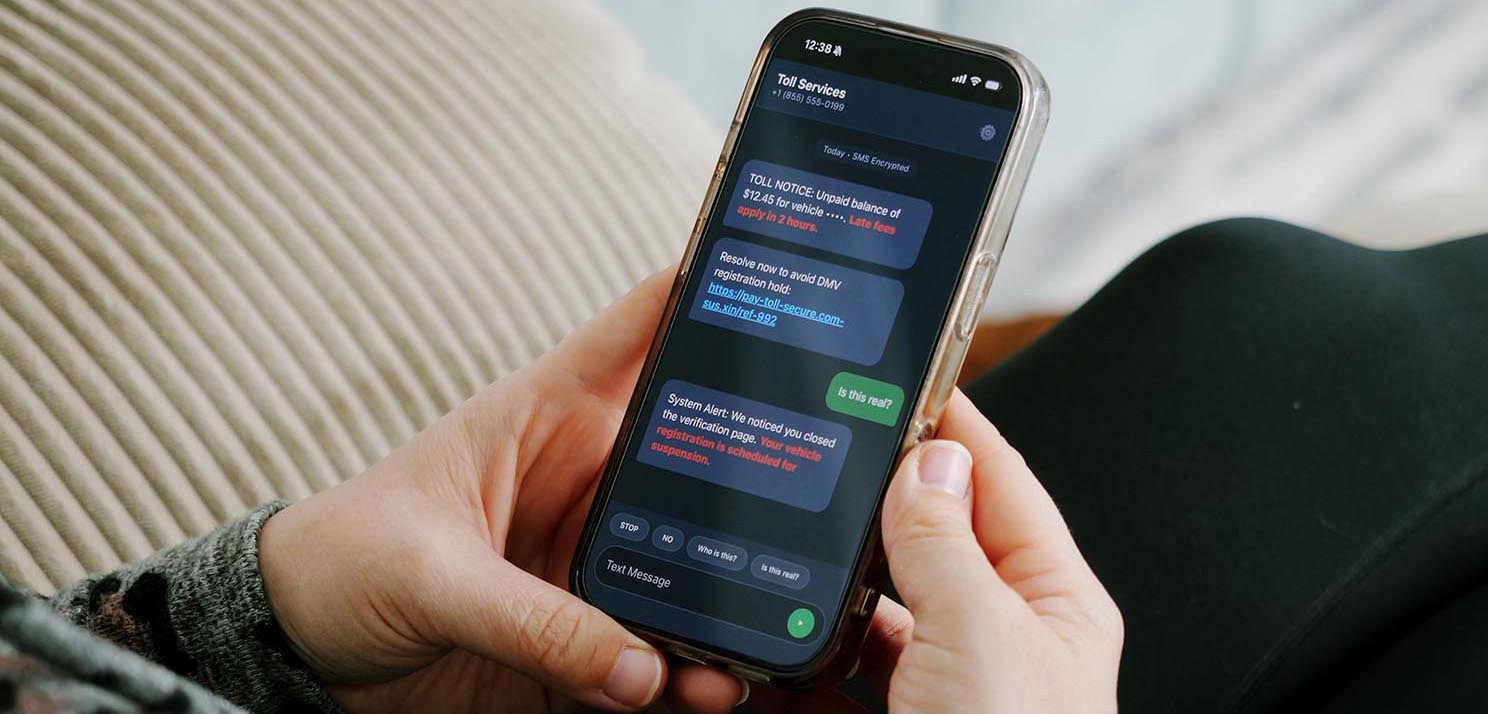
In today’s digital age, businesses face an ever-growing array of cyber threats, and one that’s becoming increasingly prominent is smishing. Smishing — a blend of “SMS” and “phishing” — is a form of phishing that takes place through fraudulent text messages (SMS).
In this article, we’ll explore how smishing works, why it poses a significant threat to businesses, and most importantly, how businesses can protect their organizations from these attacks.
What is smishing – and how does it work?
Smishing is fraud involving the use of text messages to trick individuals into divulging sensitive information or clicking on malicious links.
Much like phone call spoofing, fraudsters often employ text spoofing to send you messages from a number that appears on your phone as KeyBank or another reputable company you do business with. These fraudsters often claim to be investigating fraudulent activity on your account.

One frequently used tactic involves a fraudster saying they need to verify you as a client. They then ask you to provide your login ID, password, and one-time security code. Once provided, they have full access to your account and can transfer funds to themselves.

In another common tactic, the fraudster includes a fraudulent link in a text message that takes you to a spoofed website that looks virtually identical to a legitimate site, such as KeyNavigator or KeyBank Business Online. Once you attempt to sign in to the fake site, your credentials are captured. From there, the fraudster will attempt to obtain your one-time passcode under the guise of “helping resolve your log-in issues" to gain full access to your account.
Remember: Always pay attention to who reached out first.
When you initiate an interaction with Key, we may ask for information such as the last four digits of your Social Security number, login ID, or a one-time passcode to verify your identity.
However, Key will never contact you unexpectedly by phone, text message, or email and ask for your full Social Security number, login ID, or other personal information if the communication was not initiated by you.
Verify these requests by contacting a known Key resource, such as your local branch, 1-800-KEY2YOU®, or our Fraud Client Service Center (1-800-433-0124), before providing any sensitive information.
Why is smishing a concern for businesses?
Smishing tactics look deceptively legitimate.
Smishing is particularly effective because the text messages, spoofed numbers, and spoofed websites are often virtually indistinguishable from authentic ones. People trust the tactics on appearance and are falling victim at an alarming rate.
As more employees use their mobile phones for work purposes, smishing is becoming a major concern for businesses. Fraudsters are increasingly using smishing to target businesses of all types, industries, and sizes — and we’ve received reports of Key clients being targeted.
The monetary cost is substantial.
The FTC data shows text message scams cost consumers and businesses over $470 million in 2024.1 With business smishing attacks on the rise, and more sizeable bank accounts at stake, the monetary risk smishing poses is immense.
Smishing can have a significant impact on a company’s bottom line — and its reputation. The best way to mitigate these damages is to avoid becoming a victim in the first place.
How to protect your business from smishing
Safeguarding your business against smishing attacks requires a coordinated effort between business leadership and all employees.
Best Practices for Businesses
- Invest in continuous education to stay on top of emerging fraud trends.
- Report any suspicious texts regarding your accounts to your financial institution immediately.
- Employ a third-party expert to identify, disable, and prosecute websites impersonating your brand.
- Create and enforce a policy for using personal mobile devices for business purposes.
- Ensure your employees are registered for and using strong authentication (FIDO security keys, fingerprint validation, facial recognition, etc.) to sign in to online banking sites.
- Remind employees to:
- Be cautious of all unexpected text messages.
- Never share sensitive information via text message including login IDs, passwords, or one-time passcodes.
- Verify a suspicious text message immediately by calling a known phone number or contact at the business or financial institution.
- Never click on links that you did not originate.
Let’s work together to protect your business.
At Key, we want to work alongside you and your employees to help secure your business against smishing and other forms of fraud.
We’re committed to arming you with the latest information on cybercrime and payments fraud. Visit key.com/businessfraud to learn more. For information about Key’s Core Fraud Solutions, connect with your Payments Advisor or Relationship Manager.