There’s momentum for affordable in ’26 despite a challenging capital environment
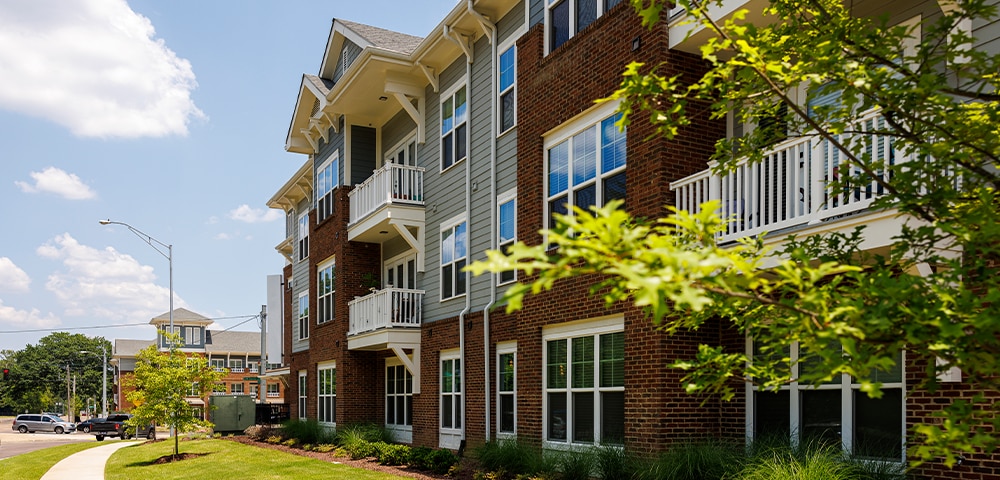
The country is undeniably experiencing an affordable housing shortage. The National Low-Income Housing Coalition estimates that the country is 7.1 million low-income units short1 of meeting current demand. But, increasing the affordable housing supply requires a complex capital stack, and gaps in funding can derail affordable housing projects.
Robert Likes, president of community lending and investment and head of the national affordable housing platform at KeyBank, spoke about current trends in the sector on the State of the Industry Power Panel at Affordable Housing Finance Live (AHF). While Likes discussed the capital challenges, he was optimistic about the opportunities.
Debt is plentiful, but equity has been a challenge.
The good news: debt is widely available for affordable housing. Banks have expanded their affordable housing platforms in response to more demand entering the market, and more lenders have entered the sector. Bridge loans are also readily available, although to a lesser extent than permanent financing. “Debt is plentiful,” says Likes. “I don’t see any pullback on the debt side as we go into 2026.” In addition, the bond test for HUD’s Low-Income Housing Tax Credit (LIHTC) program was lowered from 50% to 25%. That goes into effect in January 2026, keeping debt levels healthy next year and beyond.
On the equity side of the capital stack, there are gaps in financing. Limited public welfare investment and tax appetite, as well as alternative lending strategies are all reasons why equity funding has pulled back. As a result, sponsors are relying on lenders and banks more often to round out the capital.
“Lenders and investors are looking at quality sponsors that they can really lean on,” says Likes. “It’s a two-way street. The sponsors and the developers are doing the exact same thing. They are clinging to lenders and banks, saying, ‘We need you, and we're going to lean on you.’”
Key has seen the dynamic firsthand. The bank provides $6 billion to the affordable housing sector annually.
“It was a challenging year, but there’s momentum that will continue into 2026 despite the challenges,” says Likes. “The expansion of the LIHTC program, increased allocation caps at Freddie Mac and Fannie Mae, and an incoming wave of expiring LIHTC projects occurring in the next decade that will create preservation opportunities are all reasons to be positive about the future of the affordable housing market.”
Housing preservation is an important piece of the puzzle.
Developing more low-income housing is critical in responding to the national housing crisis, but preservation is equally important. Housing preservation ensures that existing affordable homes remain affordable through rehabilitation and renewed capital commitments. LIHTC properties are at risk of transitioning to market-rate properties after 30 years, and it is especially important to preserve these units to maintain the existing affordable housing stock. “There is a massive wave of affordable housing LIHTC expirations coming over the next decade, amounting to almost a million units,” says Likes. “That will create a lot of preservation opportunities.”
While preservation is important, it requires a different strategy from ground-up construction deals, and a strategy that is tailored to the specific market and project. “We’re trying to attack this affordable housing problem on all spectrums, from very low to low and middle, but it's a different toolkit for housing preservation,” adds Likes.
The process requires understanding the local market, building the right capital stack with tax abatements and soft loans, and leaning into the expanded LIHTC program to re-syndicate those units. “With this approach, we can develop in very difficult markets and create instant middle income housing,” says Likes. “This keeps the affordable investors and operators in those markets, keeping rents in the affordable range. We found it's a good way to incentivize everyone.”
Stick-to-itiveness is the 2026 slogan for affordable housing.
2025 was a challenging year for affordable housing, but a good year. Likes is optimistic about the future. He describes the stakeholders in the affordable sector as having “stick-to-itiveness,” or a “dogged perseverance and tenacity to accomplish anything.” Although the deals have been difficult to put together, the industry has united to accomplish healthy activity this year. Much of the success comes from leaning into banking relationships, which are critical for putting the right deal together.
There are some potential headwinds ahead — but there is also a lot of opportunity. The LIHTC program is expanding, Fannie Mae and Freddie Mac have increased their lending caps targeting affordable housing, and there is tremendous demand for affordable housing that is not going to go away. While there may be some challenges — like limited equity causing gaps in funding — there are also tools and resources to make affordable housing deals work. The industry has momentum.
Connect With Us
For help building the optimal capital stack for your next affordable housing project, connect with Rob Likes or another member of KeyBank’s community lending and investment team.
Learn More
Visit key.com/affordable for our latest in thought leadership and the breadth of our expertise in the affordable space.
This article is for general information purposes only and does not consider the specific investment objectives, financial situation, and particular needs of any individual person or entity.
All credit products are subject to collateral and/or credit approval, terms, conditions, and availability and subject to change. Banking products and services are offered by KeyBank National Association.